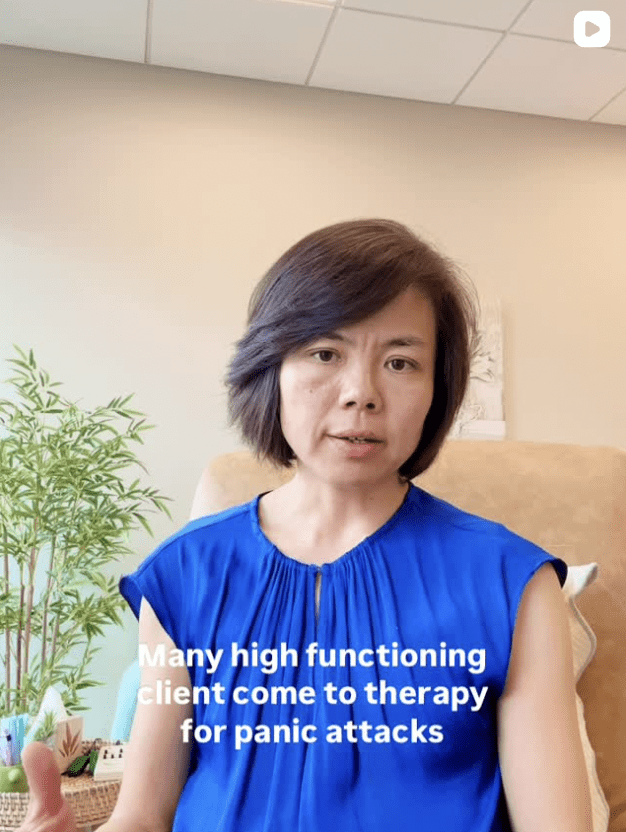
When people first experience panic attacks, their primary goal is simple:
“I just want this to stop.”
And understandably so.
Panic attacks can feel overwhelming and frightening.
But in many cases, panic is not the core problem.
It is a signal from the nervous system that deeper emotional patterns need attention.
Why Body-Based Therapy Matters
In recent years, increasing attention has been given to how the nervous system stores stress and trauma.
Clinicians and researchers at institutions such as Harvard Medical School and the Cleveland Clinic have emphasized that emotional distress is not only cognitive — it is also physiological.
Approaches that include body awareness, emotional processing, and trauma-informed therapy can help individuals regulate the nervous system while also addressing deeper relational and psychological patterns.
For many high-functioning adults, this combination allows therapy to move beyond short-term symptom management toward lasting emotional clarity and stability.

The First Stage: Stabilizing the Nervous System
In the early phase of therapy, the focus is often on helping the body settle.
Using approaches such as somatic awareness and EMDR-informed work, clients learn to:
• recognize physical signals of anxiety
• regulate their nervous system
• reduce the intensity of panic
For many high-functioning adults, panic attacks can decrease significantly within a relatively short period once the nervous system receives the right support.
The Second Stage: Understanding the Deeper Pattern
Once symptoms stabilize, therapy often shifts toward deeper understanding.
Many clients begin to notice patterns such as:
• over-responsibility for others
• difficulty saying no
• guilt when setting boundaries
• a lifelong habit of pushing through stress
These patterns may have once helped them succeed.
But over time, they can create internal pressure that the nervous system eventually cannot sustain.
The Third Stage: Building Emotional Clarity
The most meaningful part of therapy is not just symptom relief — it is developing clarity about how to live differently.
Clients begin to:
• recognize when their body signals stress
• understand the emotional roots of their anxiety
• set boundaries without excessive guilt
• communicate their needs more clearly
Instead of reacting automatically, they begin responding with intention.

The Outcome: Stability Without Dependence on Therapy
As these changes take root, therapy naturally becomes less frequent.
Sessions move from weekly or bi-weekly → to monthly → and eventually end when the client feels ready.
This is often the true goal of therapy:
not dependence, but greater emotional autonomy and stability.
A Different Way to Think About Anxiety
For high-functioning adults, anxiety is often not a sign of weakness.
It can be a sign that something important inside is ready to shift.
When addressed thoughtfully, those moments of disruption can lead to deeper self-understanding and healthier ways of living.
If You Are Experiencing Something Similar
If you have recently begun experiencing anxiety or panic despite being someone who normally functions well in life, it may be worth exploring what your nervous system is trying to communicate.
Therapy can offer a space to understand those signals and move toward greater clarity and stability.